
Motorcycle exhausts constantly face heat, moisture, road debris, mud, and contaminants that gradually reduce their appearance and durability. Without proper maintenance, even a high-quality exhaust system can develop rust, stubborn stains, discoloration, or carbon buildup. These problems not only affect your motorcycle’s appearance but may also shorten the lifespan of the exhaust.
Knowing how to clean a motorcycle exhaust properly helps you preserve its finish, prevent corrosion, and keep your bike looking its best. Whether your motorcycle has a stainless steel, chrome, titanium, or black-coated exhaust, using the correct cleaning method can make a significant difference.
This guide explains the safest techniques, recommended cleaning tools, common mistakes to avoid, and maintenance tips to help your motorcycle exhaust remain clean and shiny for years.
Why You Should Clean Your Motorcycle Exhaust Regularly
Cleaning your motorcycle exhaust does more than improve its appearance. Regular maintenance removes harmful contaminants before they damage the surface.
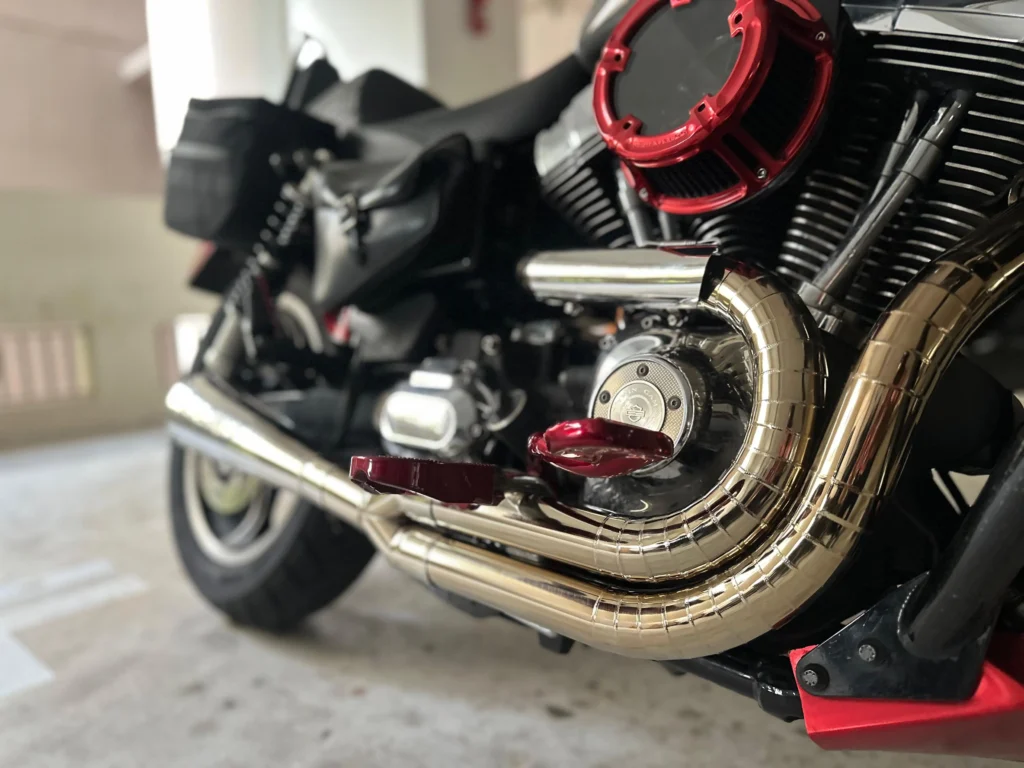
Road salt, mud, water, oil residue, bug splatter, and brake dust gradually accumulate on the exhaust. Over time, these materials trap moisture against the metal, increasing the risk of corrosion and permanent staining.
A clean exhaust also makes routine inspections easier. You can quickly spot cracks, loose brackets, damaged heat shields, or small exhaust leaks before they become expensive repairs.
Most importantly, consistent cleaning helps maintain the value of your motorcycle, especially if you own a premium touring bike, cruiser, or custom Harley-Davidson.
Prepare the Right Cleaning Equipment
Before you begin cleaning, gather the appropriate supplies. Using proper equipment prevents scratches while making the job much easier.
Prepare the following items:
- Microfiber towels
- Soft sponge
- Soft-bristle brush
- Bucket of warm water
- Mild motorcycle shampoo
- Metal polish suitable for your exhaust material
- Degreaser for oily residue
- Rubber gloves
- Clean water for rinsing
Avoid steel wool, wire brushes, or abrasive sandpaper unless you are specifically removing heavy rust from unfinished steel. These materials can permanently scratch chrome or stainless steel surfaces.
Let the Exhaust Cool Completely
Safety should always come first.
Never attempt to clean an exhaust immediately after riding. Motorcycle exhaust systems can reach extremely high temperatures and remain hot long after the engine stops.
Allow the exhaust to cool completely before touching any metal surfaces. Waiting 30 to 60 minutes is usually enough for most motorcycles.
Cleaning a hot exhaust can also cause cleaning products to dry too quickly, leaving unwanted stains or residue.
Wash Away Loose Dirt First
One of the biggest mistakes people make is polishing a dirty exhaust without removing loose debris.
Start by rinsing the exhaust with clean water to remove dust, sand, and mud. This simple step minimizes the chance of scratching the finish during cleaning.
Next, mix motorcycle shampoo with warm water according to the manufacturer’s instructions.
Use a soft sponge to gently wipe every visible section of the exhaust.
Pay extra attention to:
- Weld joints
- Mounting brackets
- Heat shields
- Muffler tips
- Areas behind the foot pegs
These locations usually collect the most dirt.
After washing, rinse thoroughly with clean water.
Remove Grease and Oil Stains Carefully
Motorcycle exhausts often collect grease from chain lubricant, engine oil, or road grime.
If regular soap cannot remove these stains, apply a motorcycle-safe degreaser.
Spray the cleaner onto a microfiber cloth instead of directly onto the exhaust whenever possible. This method gives you better control and reduces unnecessary chemical exposure to surrounding motorcycle parts.
Gently wipe oily areas using circular motions.
Repeat the process until the grease disappears.
Finally, wipe the surface with a damp microfiber towel to remove any remaining cleaner.
How to Clean a Motorcycle Exhaust Properly with Metal Polish
Once the exhaust is clean and dry, polishing restores its original shine.
Choose a polish specifically designed for your exhaust material.
For example:
- Chrome polish for chrome exhausts
- Stainless steel polish for stainless systems
- Titanium-safe cleaner for titanium exhausts
- Matte finish cleaner for black-coated exhausts
Apply a small amount of polish to a clean microfiber cloth.
Rub the polish evenly across the surface using gentle circular movements.
Avoid applying excessive pressure because aggressive polishing can create swirl marks.
Allow the polish to haze according to the product instructions before buffing it with another clean microfiber towel.
This step leaves the exhaust smooth, glossy, and protected from oxidation.
Remove Carbon Buildup from the Exhaust Tip
Carbon deposits naturally develop inside the exhaust outlet.
Although some buildup is normal, excessive carbon makes the exhaust look neglected.
To clean the exhaust tip:
- Apply carbon remover or metal polish.
- Let the cleaner sit for several minutes.
- Use a soft brush or microfiber cloth.
- Wipe away loosened deposits.
- Repeat if necessary.
Avoid inserting hard tools deep inside the exhaust because they may damage internal components or protective coatings.
Cleaning only the visible section usually provides excellent cosmetic results.
Prevent Rust Before It Starts
Rust is one of the biggest enemies of any motorcycle exhaust.
Moisture combined with dirt creates ideal conditions for corrosion.
After every wash, completely dry the exhaust using a microfiber towel.
Never allow water droplets to remain on chrome or stainless steel surfaces.
If you frequently ride in rainy weather or coastal environments, consider applying a protective metal wax after polishing.
The protective layer helps repel water while slowing oxidation.
Avoid Common Exhaust Cleaning Mistakes
Many motorcycle owners accidentally damage their exhausts by using the wrong cleaning techniques. Avoiding these common mistakes will help preserve the finish and extend the life of your exhaust system.
Never use household cleaners that contain bleach, chlorine, or strong acids. These chemicals can discolor metal surfaces and damage protective coatings.
Likewise, avoid cleaning pads made from steel wool or coarse abrasive materials. While they may remove rust quickly, they often leave permanent scratches on chrome, stainless steel, and titanium exhausts.
Another mistake involves polishing the exhaust under direct sunlight. Heat causes cleaning products to dry too quickly, making them difficult to remove and increasing the risk of streaks.
Finally, never ignore the manufacturer’s cleaning recommendations. Some aftermarket exhausts feature ceramic coatings, matte finishes, or specialized treatments that require specific cleaning products.
How Often Should You Clean a Motorcycle Exhaust Properly?
The ideal cleaning schedule depends on your riding habits and the environments you frequently encounter.
For motorcycles used mainly on city roads, cleaning the exhaust every two to four weeks is usually sufficient. This routine prevents dirt, road grime, and light oxidation from building up.
If you often ride in rainy weather, dusty conditions, muddy trails, or coastal areas, inspect and clean the exhaust more frequently. Salt, moisture, and fine dust accelerate corrosion and dull the exhaust’s finish much faster.
Additionally, perform a quick wipe-down after long-distance touring. Removing fresh contaminants before they harden makes future cleaning much easier.
Regular maintenance always requires less effort than restoring a neglected exhaust.
Does a Clean Exhaust Affect Motorcycle Performance?
Although cleaning the outside of the exhaust does not directly increase horsepower, maintaining the exhaust system still supports overall motorcycle performance.
A clean exhaust makes it easier to identify cracks, loose mounting bolts, damaged heat shields, or small exhaust leaks. Detecting these issues early helps maintain proper exhaust flow and prevents more serious mechanical problems.
Carbon buildup inside the muffler or exhaust outlet can also restrict exhaust gases over time, especially on older motorcycles. Inspecting the exhaust during routine cleaning allows you to notice unusual soot accumulation or other warning signs before they affect engine efficiency.
For riders who install aftermarket exhaust systems, regular cleaning also protects premium materials such as stainless steel, titanium, or ceramic-coated finishes from premature wear.
Long-Term Tips to Keep Your Motorcycle Exhaust Looking New
Consistent care is the key to maintaining a clean and attractive motorcycle exhaust.
Follow these practical habits to keep your exhaust in excellent condition:
- Wash your motorcycle regularly to prevent dirt buildup.
- Dry the exhaust completely after every wash.
- Apply metal polish every few months if recommended for your exhaust material.
- Remove bug residue and road tar as soon as possible.
- Store the motorcycle in a dry, well-ventilated area.
- Use a breathable motorcycle cover when parking for extended periods.
- Inspect mounting brackets and heat shields during every cleaning session.
- Replace damaged components before they create additional problems.
These simple maintenance habits help preserve both the appearance and structural integrity of the exhaust system for many years.
Choose Cleaning Products That Match Your Exhaust Material
Not every exhaust uses the same material, so selecting the right cleaner is essential.
Chrome exhausts respond best to chrome-specific polish that restores shine without scratching the surface. Stainless steel exhausts benefit from dedicated stainless cleaners that remove oxidation while maintaining their natural finish.
Titanium exhausts require non-abrasive cleaners because harsh chemicals may alter their distinctive color. Meanwhile, black-coated or ceramic-coated exhausts should only be cleaned with products designed for coated surfaces to prevent fading or peeling.
Using the correct cleaning product protects the finish while reducing the risk of unnecessary damage.
Conclusion
Understanding how to clean a motorcycle exhaust properly helps protect one of the most visible and important components of your motorcycle. Regular cleaning removes dirt, grease, road contaminants, and carbon deposits before they cause corrosion or permanent staining.
The process begins by allowing the exhaust to cool completely, washing away loose debris, removing grease with safe cleaning products, and polishing the surface according to its material. Just as importantly, avoiding abrasive tools and harsh chemicals prevents accidental damage that can shorten the exhaust’s lifespan.
By following a consistent maintenance routine, you can keep your motorcycle exhaust clean, shiny, and in excellent condition while making inspections easier and preserving your motorcycle’s overall value. Whether you ride daily, enjoy weekend tours, or own a custom Harley-Davidson, proper exhaust care remains an essential part of responsible motorcycle maintenance.
