
Few motorcycle brands command instant recognition like Harley-Davidson. Long before a Harley comes into view, its deep, rhythmic rumble announces its presence. Riders and enthusiasts around the world instantly recognize this unmistakable sound, making it one of the strongest identities in the motorcycle industry.
Many people believe that the exhaust system alone creates Harley’s legendary rumble. In reality, the engine’s design plays the biggest role. Harley-Davidson has spent more than a century refining its famous Harley V-Twin engine while preserving the character that riders love.
Let’s explore how the Harley V-Twin evolved and why its sound remains unlike any other motorcycle.
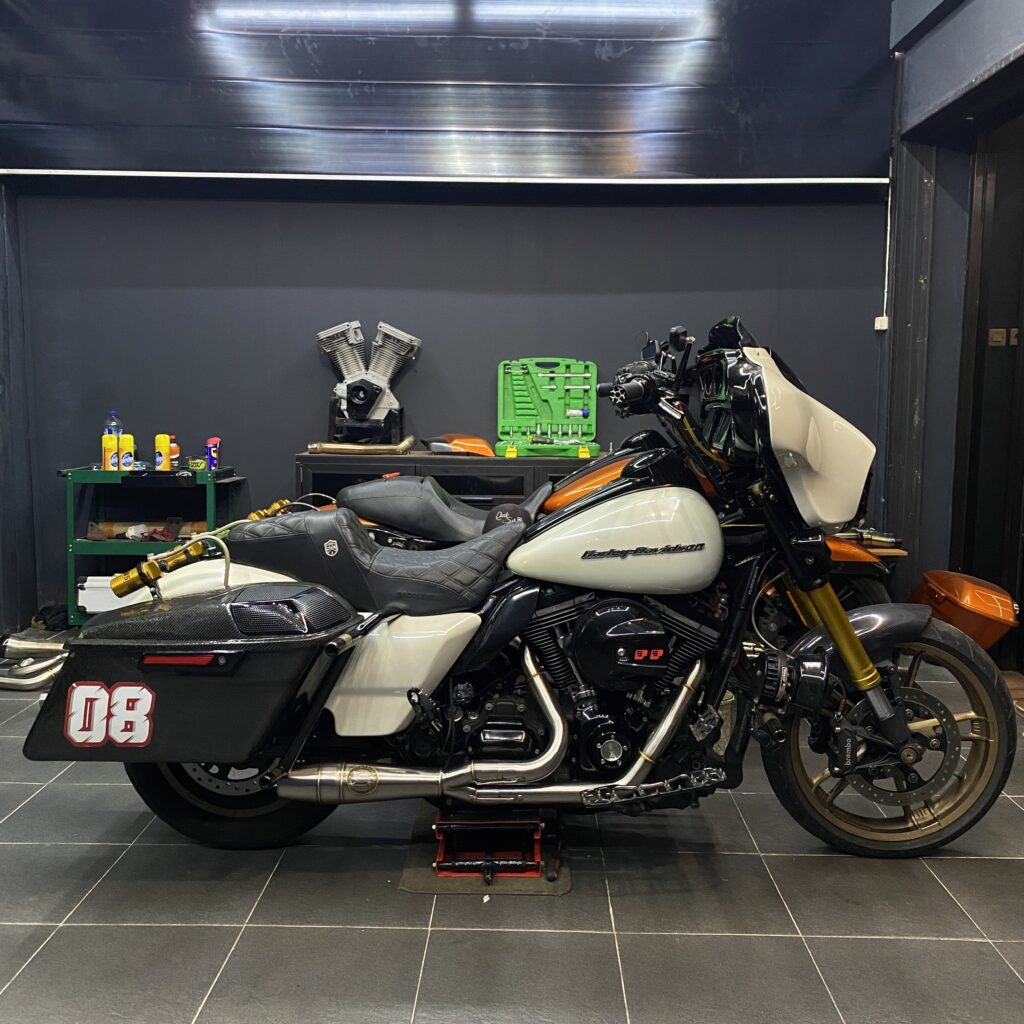
The Birth of Harley-Davidson’s V-Twin Engine
Harley-Davidson introduced its first V-Twin engine in 1909. The engine displaced approximately 811 cc and featured a 45-degree cylinder angle, a design that soon became the company’s signature.
Engineers selected the 45-degree layout because it allowed them to build a compact engine while producing strong low-end torque. Although this configuration generated more vibration than wider-angle V-Twin engines, riders quickly embraced its unique feel and distinctive sound.
From that point on, Harley-Davidson built its identity around the V-Twin platform.
How Harley’s V-Twin Engine Evolved
Harley-Davidson never stopped improving its engine technology. Instead of abandoning its heritage, the company refined every generation while keeping the engine’s unmistakable personality.
Flathead: Building a Strong Foundation
Harley-Davidson produced the Flathead engine during the 1920s and 1940s.
The company designed this engine with simplicity and durability in mind. Owners appreciated its reliability and straightforward maintenance. Although the Flathead produced modest power by today’s standards, it established Harley’s reputation for dependable motorcycles.
Knucklehead: A Major Technological Leap
In 1936, Harley-Davidson introduced the Knucklehead, one of the most important engines in the company’s history.
Engineers equipped it with overhead valves (OHV), allowing the engine to produce more power and improve combustion efficiency. Riders immediately noticed the stronger performance, while the unique rocker covers inspired the famous “Knucklehead” nickname.
Panhead: Improving Reliability
Harley-Davidson launched the Panhead in 1948.
The company used aluminum cylinder heads to improve cooling and reduce engine weight. These improvements increased durability and made the motorcycle better suited for long-distance touring.
Many enthusiasts still consider the Panhead one of Harley’s most beautiful engine designs.
Shovelhead: More Power for Riders
Harley introduced the Shovelhead in 1966 to meet growing demand for higher performance.
The engine delivered greater horsepower and stronger torque than previous generations. Riders appreciated its ability to handle highway cruising and custom modifications, making it one of Harley’s most popular classic engines.
Evolution (Evo): A New Era of Reliability
Harley-Davidson transformed its engine lineup in 1984 with the release of the Evolution, commonly known as the Evo.
Engineers redesigned many internal components to improve durability and reduce common issues such as oil leaks. They also enhanced cooling efficiency, allowing the engine to perform more consistently under demanding conditions.
Many Harley owners still regard the Evo as one of the brand’s most reliable engines.
Twin Cam: More Performance Without Losing Character
Harley-Davidson released the Twin Cam engine in the late 1990s.
The new design featured dual camshafts, allowing engineers to improve valve timing and increase overall engine performance. Despite these mechanical upgrades, Harley maintained the engine’s familiar feel and signature exhaust note.
The Twin Cam powered many of Harley’s touring and cruiser motorcycles for years.
Milwaukee-Eight: Modern Engineering Meets Tradition
Harley-Davidson introduced the Milwaukee-Eight in 2016.
The engine features four valves per cylinder, improving airflow, combustion efficiency, and power delivery. Engineers also reduced vibration, improved cooling performance, and increased fuel efficiency.
Even with these modern upgrades, the Milwaukee-Eight still delivers the unmistakable Harley riding experience.
What Makes the Harley V-Twin Sound So Unique?
Harley’s signature sound comes from several engineering choices rather than the exhaust system alone.
The 45-Degree Engine Angle
Harley-Davidson continues to use a 45-degree V-Twin configuration across most of its lineup.
This narrow cylinder angle creates a unique combustion rhythm that differs significantly from engines with wider V angles.
Uneven Firing Intervals
The Harley crankshaft creates uneven firing intervals.
Instead of producing perfectly spaced combustion events, the engine generates the famous “potato-potato” rhythm that riders instantly recognize.
This firing pattern gives Harley motorcycles their unmistakable heartbeat.
Long-Stroke Engine Design
Harley engineers use a long-stroke engine design to maximize low-end torque.
The longer piston travel creates stronger pulling power at lower engine speeds while producing a deeper and richer exhaust tone.
This design perfectly suits relaxed cruising and long-distance touring.
Carefully Tuned Exhaust System
The exhaust system enhances the engine’s natural sound instead of creating it.
Harley engineers carefully tune factory exhausts to preserve the iconic rumble while meeting modern emissions and noise regulations. Aftermarket exhaust systems may increase volume or alter tone, but they cannot replicate the engine’s mechanical character on their own.
Harley Continues to Modernize Its V-Twin
Harley-Davidson continues to invest in new technology without sacrificing its heritage.
Modern V-Twin engines now include:
- Electronic Fuel Injection (EFI)
- Improved cooling systems
- Advanced engine management software
- Better fuel efficiency
- Reduced engine vibration
- Lower exhaust emissions
- Higher overall reliability
These improvements allow Harley to satisfy modern riders while preserving the experience that made the brand famous.
Why Riders Still Choose Harley V-Twin Engines
Motorcycle technology has advanced dramatically, yet Harley-Davidson continues to attract passionate riders around the world.
Many riders choose Harley because the motorcycles offer:
- A legendary exhaust note
- Strong low-end torque
- Comfortable highway performance
- Rich American motorcycle heritage
- Timeless styling
- A unique emotional riding experience
For Harley owners, riding means far more than reaching a destination. Every twist of the throttle delivers a mechanical experience that few motorcycles can match.
How to Maintain a Harley V-Twin Engine
Regular maintenance keeps a Harley V-Twin performing at its best.
Follow these maintenance practices:
- Change the engine oil on schedule.
- Use high-quality fuel that matches Harley’s recommendations.
- Replace spark plugs and air filters when necessary.
- Check the cooling system on liquid-cooled models.
- Schedule routine inspections with qualified Harley-Davidson technicians.
Consistent maintenance improves reliability, extends engine life, and preserves the engine’s signature sound.
Conclusion
Harley-Davidson has refined its V-Twin engine for more than a century without losing the characteristics that made it legendary. Every generation—from the Flathead to the Milwaukee-Eight—introduced meaningful improvements in performance, durability, and efficiency while protecting the engine’s unmistakable identity.
The Harley sound comes from purposeful engineering rather than chance. Its 45-degree cylinder angle, uneven firing intervals, long-stroke architecture, and carefully tuned exhaust system work together to create one of the most recognizable engine notes in the world. That unique combination continues to define Harley-Davidson and inspires generations of riders to embrace the open road.
